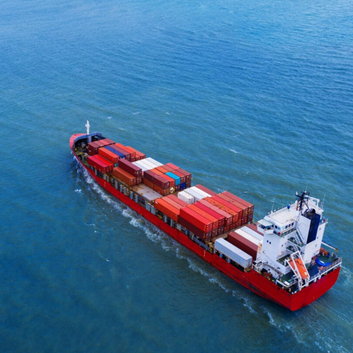
WHAT IS MARITIME TRANSPORT?
In the international logistics sector, which continues to develop rapidly, it is extremely important to understand the vital role of maritime transport. As global trade volumes increase, seaborne transportation has emerged as the backbone of the global supply chain. But what exactly is maritime transport, and why is it so crucial in logistics today?
Maritime Transport refers to the movement of goods and people via river, lake, sea or ocean using ships, vessels, and other waterborne carriers. It is the most cost-effective and energy-efficient method of transporting large quantities of goods over long distances. From raw materials like oil, coal, and iron ore to finished products such as cars, electronics, and clothing, maritime transport handles about 90% of global trade by volume.
This mode of transport is not only essential for international trade but also plays a strategic role in economic development, energy supply chains, and the integration of global markets.
• Key Components of Maritime Transport
Maritime transport is a complex system involving various components that work together to ensure the smooth movement of cargo. These include:
Shipping Lines and Carriers: Companies that own or operate fleets of cargo ships. Examples include Maersk, MSC, and CMA CGM.
Ports and Harbors: Critical nodes in the maritime supply chain where loading, unloading, and customs clearance occur.
Vessels: These come in different types depending on the cargo —container ships, bulk carriers, tankers, roll-on/roll-off ships, etc.
Freight Forwarders and Logistics Providers: They coordinate the shipping process, manage documentation, and provide end-to-end logistics solutions.
Regulatory Bodies: Organizations such as the International Maritime Organization (IMO) ensure maritime safety and environmental compliance.
• Types of Maritime Transport
Maritime transport can be categorized based on the type of cargo and service:
Container Shipping: This is the most common form of maritime transport for manufactured goods. Standardized containers (usually 20 or 40 feet in length) allow for easy handling and intermodal transport, connecting sea freight with road and rail logistics.
Bulk Shipping: Used to transport unpackaged bulk cargo like coal, grain, and ore. Bulk carriers are specially designed to carry large volumes efficiently.
Tanker Shipping: Tankers move liquid cargo such as oil, gas, and chemicals. They are crucial for the global energy supply chain.
Roll-on/Roll-off (Ro-Ro): Ro-Ro vessels are designed to carry wheeled cargo like cars, trucks, and heavy machinery, which are driven on and off the ship.
General Cargo Shipping: This involves the shipment of goods that are not containerized or in bulk —often including machinery, vehicles, and break-bulk cargo.
• Advantages of Maritime Transport
Maritime transport has several clear benefits that make it indispensable in the global logistics system:
Cost Efficiency: Compared to air and land transport, shipping is significantly cheaper per unit of weight, especially for bulk and heavy goods.
Large Capacity: Ships can carry tens of thousands of tons of cargo, far more than trucks, trains, or planes, making them ideal for high-volume shipments.
Global Reach: Sea transport connects even the most distant markets. International trade relies heavily on sea routes and port networks.
Environmentally Friendly (Relatively): Although not without impact, maritime shipping emits fewer greenhouse gases per ton-kilometer compared to air or road transport.
• Challenges Facing Maritime Transport
Despite its many benefits, maritime transport faces several challenges in today’s fast-evolving logistics landscape:
Environmental Concerns: The maritime industry contributes to global CO2 emissions, oil spills, and marine pollution. As a result, international regulations like IMO 2020 aim to reduce sulfur emissions from ships.
Port Congestion: Major ports like Los Angeles, Shanghai, and Rotterdam have seen delays due to congestion, impacting global supply chains.
Regulatory Compliance: Shipping involves complex documentation, customs procedures, and compliance with international trade laws —which can vary by region and cargo type.
Security Risks: Piracy, smuggling, and geopolitical tensions can affect shipping routes and vessel safety. Cybersecurity threats are also rising with digitalization.
• The Role of Technology in Modern Maritime Transport
The maritime sector is undergoing a digital transformation, improving efficiency and visibility. Innovations include:
Automated Port Operations: Cranes, loaders, and customs processes are increasingly automated to reduce dwell time.
Smart Shipping & IoT: Real-time tracking, predictive maintenance, and sensor-based monitoring of cargo and vessel conditions.
Blockchain: Enhances transparency and security in shipping documentation and cargo tracking.
Green Shipping Technologies: Hybrid engines, LNG fuel, and wind-assisted propulsion reduce environmental impact.
• Maritime Transport and the Future of Global Trade
As e-commerce, nearshoring, and global trade dynamics evolve, maritime transport will continue to adapt. The growing emphasis on sustainability, resilience, and digital innovation will define the sector’s future.
Moreover, with the expansion of major infrastructure projects —such as the Panama Canal and China’s Belt and Road Initiative— the importance of maritime logistics is only set to increase.
Investments in port infrastructure, vessel modernization, and intermodal connectivity will ensure that maritime transport remains the backbone of global commerce.
• Conclusion
Maritime transport is a cornerstone of international logistics, enabling efficient, cost-effective movement of goods across continents. While it faces challenges such as environmental regulation and port congestion, innovations in technology and sustainable practices are reshaping its future.
For businesses engaged in global trade, understanding the capabilities and complexities of maritime transport is essential. Whether you're shipping raw materials or finished products, the sea will likely remain your most reliable —and economical— route for years to come.
Published 07.01.2025 |by Imports Exports Logistics, Inc.